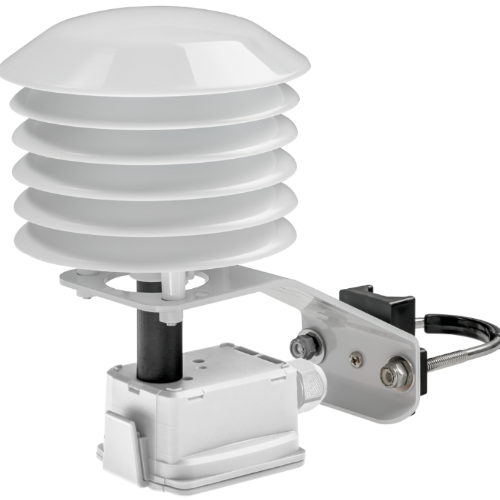
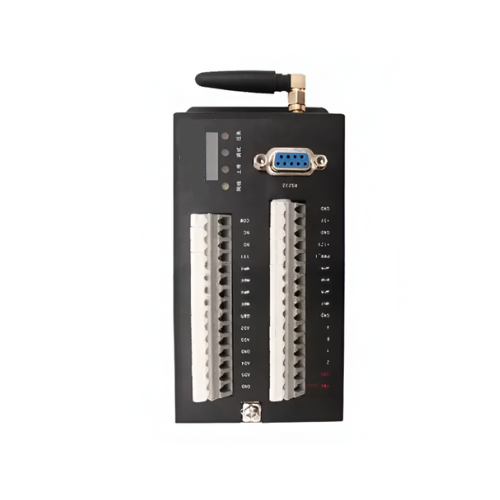
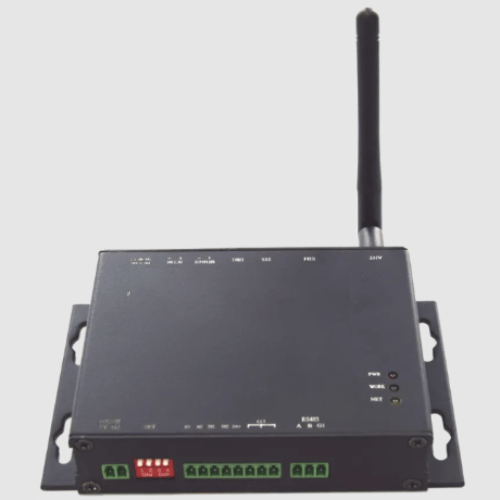
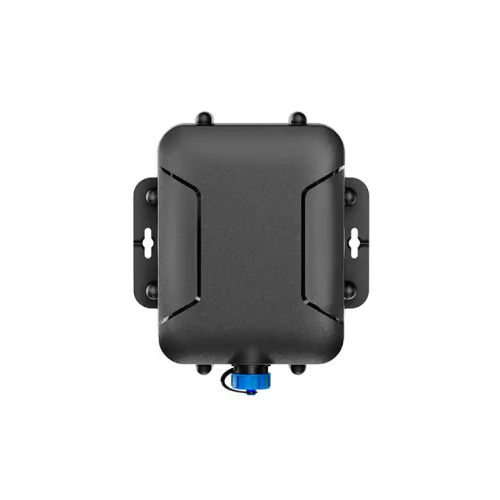
Radar Ultrasonic Flowmeter with NB IoT 4G Wireless Sensor – Asset Track Pro

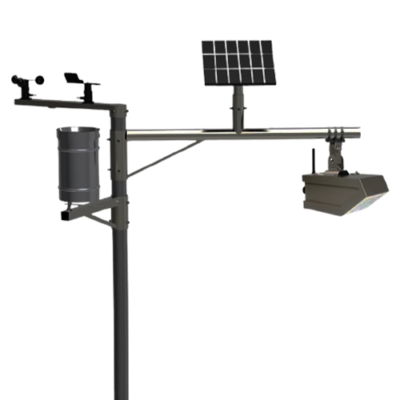
High precision radar ultrasonic flowmeter, NB-IoT compatible, non-contact measurement. Ideal for water management and environmental monitoring.

SKU: ATPNBED-147 Category:

Description

Technical Specifications

Type Variable Area Water Flowmeters, Ultrasonic Flow meters
Material Metal
Customized Support OEM, ODM
Ultrasonic Type Radar Type
Measurement Principle Uses sound waves to measure the flow velocity by analyzing the time taken for an ultrasonic pulse to travel between the transmitter and the fluid surface Utilizes microwave radar waves to measure the flow velocity by detecting the frequency shift of the reflected radar signal from the fluid surface
Non-Contact Measurement Yes Yes
Accuracy (Flow) 1% to 0.5% 0.05% FS
Accuracy (Level) 0.25% to 0.5% ±2% FS
Measurement Range (Level) 9.84 ft (3 m) 22.96 ft to 131.23 ft (7 m to 40 m)
Analog Output 4 to 20 mA/750 Ω load 4 mA to 20 mA
Relay Output 4 channels AC 250 V / 8 A or Dc 30 V / 5 A state programmable
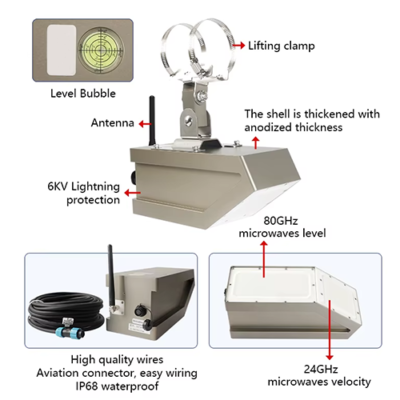
Data Transmission RS485, RS232 communication, MODBUS protocol (optional) RS485 or RS232, LoRa (wireless option), NB-IoT (wireless option), 4G RTU (wireless option)
Sensitivity to Environmental Conditions Sensitive to temperature variations, wind, and atmospheric conditions that may affect sound wave propagation Less affected by temperature, wind, or other environmental conditions; performs well in harsh environments
Installation Complexity Generally easy to install with minimal calibration required. Requires a clear path for the ultrasonic pulse to travel Slightly more complex installation due to the need for precise alignment, but more robust in diverse conditions
Maintenance Requirements Low maintenance; however, sensor surfaces may need periodic cleaning to ensure accuracy Very low maintenance; radar sensors are less prone to fouling and generally require less frequent cleaning
Cost Generally more affordable, making it a cost-effective option for smaller projects Higher initial cost due to advanced technology, but offers long-term savings in maintenance and reliability
Suitable Applications Ideal for applications where cost is a concern and environmental conditions are stable, such as municipal water management, irrigation systems, and small wastewater treatment facilities Best for challenging environments, large channels, or applications requiring high accuracy, such as in industrial wastewater management, flood monitoring, and hydrological studies

Description

Technical Specifications

Type Variable Area Water Flowmeters, Ultrasonic Flow meters
Material Metal
Customized Support OEM, ODM
Ultrasonic Type Radar Type
Measurement Principle Uses sound waves to measure the flow velocity by analyzing the time taken for an ultrasonic pulse to travel between the transmitter and the fluid surface Utilizes microwave radar waves to measure the flow velocity by detecting the frequency shift of the reflected radar signal from the fluid surface
Non-Contact Measurement Yes Yes
Accuracy (Flow) 1% to 0.5% 0.05% FS
Accuracy (Level) 0.25% to 0.5% ±2% FS
Measurement Range (Level) 9.84 ft (3 m) 22.96 ft to 131.23 ft (7 m to 40 m)
Analog Output 4 to 20 mA/750 Ω load 4 mA to 20 mA
Relay Output 4 channels AC 250 V / 8 A or Dc 30 V / 5 A state programmable
Data Transmission RS485, RS232 communication, MODBUS protocol (optional) RS485 or RS232, LoRa (wireless option), NB-IoT (wireless option), 4G RTU (wireless option)
Sensitivity to Environmental Conditions Sensitive to temperature variations, wind, and atmospheric conditions that may affect sound wave propagation Less affected by temperature, wind, or other environmental conditions; performs well in harsh environments
Installation Complexity Generally easy to install with minimal calibration required. Requires a clear path for the ultrasonic pulse to travel Slightly more complex installation due to the need for precise alignment, but more robust in diverse conditions
Maintenance Requirements Low maintenance; however, sensor surfaces may need periodic cleaning to ensure accuracy Very low maintenance; radar sensors are less prone to fouling and generally require less frequent cleaning
Cost Generally more affordable, making it a cost-effective option for smaller projects Higher initial cost due to advanced technology, but offers long-term savings in maintenance and reliability
Suitable Applications Ideal for applications where cost is a concern and environmental conditions are stable, such as municipal water management, irrigation systems, and small wastewater treatment facilities Best for challenging environments, large channels, or applications requiring high accuracy, such as in industrial wastewater management, flood monitoring, and hydrological studies