
Asset Monitoring & Environmental Sensors
Asset Monitoring & Environmental Sensors are selected to do more than collect raw measurements. They are used to verify operating state, detect anomalies early, document environmental exposure, and support technical decisions around maintenance, storage, transport, and process continuity. For engineers, plant managers, procurement teams, and system integrators, the value comes from matching sensing method, signal quality, communications approach, and environmental durability to the actual operating scenario.
Asset Track Pro supports these requirements with a practical focus on product reliability, technology evaluation, and customer-focused technical assistance. That approach matters when organizations need dependable monitoring across warehouses, production sites, utility environments, laboratories, field deployments, and mixed indoor-outdoor infrastructure.
- Measure environmental variables such as temperature, humidity, pressure, light exposure, particulate presence, and atmospheric composition around critical equipment and stored materials.
- Detect equipment movement, vibration, tilt, shock, and unauthorized handling to improve control over mobile or stationary assets.
- Monitor process-related variables including flow rate, acoustic patterns, gas presence, and optical conditions for operational verification.
- Trigger threshold-based alarms when operating conditions move outside predefined limits set by engineering, quality, or compliance teams.
- Capture time-stamped condition data for maintenance analysis, incident investigation, and audit-ready documentation.
- Support local indication, remote telemetry, or integrated supervisory monitoring depending on deployment architecture.
- Provide input to predictive maintenance strategies by identifying gradual drift, abnormal behavior, and recurring stress patterns.
- Improve chain-of-custody and storage assurance for equipment, sensitive materials, and high-value inventories.
- Enable automated reporting to maintenance, EHS, quality, and operations teams through connected data platforms.
- Help validate operating environments for machinery, instrumentation, enclosures, and transport containers in demanding commercial settings.
Choosing the right instrument set requires more than comparing sensor type alone. Technical teams should assess the measurement objective, expected failure modes, installation constraints, and downstream data use before procurement.
- Measurement range and sensitivity
Confirm the instrument covers the full expected operating span with suitable resolution at both normal and alarm thresholds.
- Accuracy, repeatability, and drift
Evaluate published accuracy under real operating conditions, including long-term stability and recalibration intervals.
- Response time
Match sensor response speed to the risk profile. Fast-changing gas release or motion events require different performance than slow warehouse climate tracking.
- Environmental protection
Review ingress protection, corrosion resistance, shock tolerance, UV resistance, and enclosure materials for plant, field, or transport exposure.
- Output and communications
Consider analog outputs, digital interfaces, industrial protocols, wireless telemetry, edge logging, and cloud or on-premises integration requirements.
- Power architecture
Assess battery life, low-power modes, external supply options, intrinsic safety requirements, and maintenance access for replacement or charging.
- Mounting and footprint
Confirm installation method, cable routing, orientation sensitivity, line-of-sight needs, and available physical space around equipment.
- Calibration and maintenance
Determine whether the device requires field calibration, factory calibration, bump testing, consumable replacement, or periodic cleaning.
- Data retention and timestamp integrity
Verify onboard logging depth, time synchronization method, export formats, and traceability of recorded events.
- Certification and regulatory alignment
Check whether the sensor platform supports required electrical, hazardous location, safety, and environmental compliance obligations.
Gas & Chemical Sensors
Gas and chemical sensors are used to detect the presence, concentration, or change of target substances in air or process environments. Common sensing principles include electrochemical, catalytic bead, nondispersive infrared, photoionization, metal oxide semiconductor, and optical absorption methods. Selection depends on target gas, concentration range, cross-sensitivity profile, humidity tolerance, and required response time. These devices are often applied around storage areas, process skids, enclosed workspaces, utility rooms, and transport environments where leaks, vapor buildup, or chemical exposure could affect safety or product integrity. Engineering review should account for calibration gases, poisoning risks, sensor life expectancy, and alarm setpoint strategy.
Click Here For Gas & Chemical Sensors
Flow Sensors
Flow sensors measure the movement of liquids, gases, or air streams through pipes, ducts, or open systems. Technologies include differential pressure, thermal mass, ultrasonic, turbine, vortex, electromagnetic, and positive displacement methods. Proper selection depends on media type, viscosity, pressure range, conductivity, line size, straight-run requirements, and acceptable pressure drop. These sensors help validate operating conditions, confirm circulation, identify blockages, and detect process deviation affecting equipment health or storage environments. Procurement teams should compare wetted materials, turndown ratio, installation orientation, and compatibility with existing control systems before specifying a device for industrial deployment.
Motion Sensors
Motion sensors identify movement, acceleration, tilt, shock, vibration, or positional change affecting equipment and handled materials. Typical technologies include passive infrared, microwave, ultrasonic, MEMS accelerometers, gyroscopes, and magnetometer-based detection. Industrial use cases range from unauthorized movement detection and trailer or container monitoring to machine vibration trending and transport condition verification. Technical evaluation should address sampling frequency, event thresholds, axis configuration, false trigger resistance, and the distinction between presence detection and motion characterization. For assets exposed to frequent relocation or mechanical stress, motion sensing supports both security control and condition-aware maintenance decisions.
Acoustic Sensors
Acoustic sensors convert sound or vibration energy into analyzable signals that reveal mechanical, pneumatic, hydraulic, or environmental behavior. They are useful for leak detection, bearing monitoring, valve condition assessment, cavitation identification, and anomaly detection in rotating or pressurized systems. Sensor options include microphones, ultrasonic transducers, piezoelectric pickups, and contact-based vibration-acoustic devices. Performance depends on frequency range, mounting method, ambient noise conditions, shielding, and signal processing capability. Industrial teams often use acoustic sensing when visible symptoms appear late but early sound-pattern changes provide warning. Data interpretation typically benefits from baseline recording and trend analysis rather than single-event judgment.
Click Here For Acoustic Sensor
Imaging & Optical Sensors
Imaging and optical sensors gather visual or light-based information to support inspection, condition confirmation, identification, and environmental assessment. Examples include machine vision cameras, infrared imagers, photoelectric sensors, laser distance sensors, lidar modules, and optical particulate detectors. These technologies help verify object presence, detect surface changes, monitor heat distribution, support barcode or label capture, and identify environmental obscuration such as dust or smoke. Selection requires attention to field of view, resolution, spectral range, lighting dependency, thermal sensitivity, enclosure protection, and data volume. Optical methods are especially valuable when non-contact inspection is required or when visual evidence supports maintenance and compliance documentation.
- Monitoring storage rooms for temperature, humidity, and airborne contaminants that could degrade calibration tools, chemicals, or regulated materials.
- Detecting shock, tilt, and unauthorized movement during transport of high-value equipment, mobile instrumentation, or service-critical assemblies.
- Verifying airflow and ventilation performance around electrical rooms, battery systems, and enclosed process equipment.
- Identifying gas leaks or vapor accumulation near chemical storage, utility infrastructure, and confined operating spaces.
- Tracking vibration and acoustic changes in pumps, fans, compressors, and motors to support maintenance planning.
- Confirming line flow conditions in cooling loops, lubrication circuits, compressed air systems, and process transfer lines.
- Supporting fleet and yard operations through motion, environmental, and handling-status monitoring of trailers, containers, and field assets.
- Monitoring server rooms, telecom shelters, and edge enclosures for heat load, moisture ingress, and access-related disturbances.
- Using imaging and optical sensing to document equipment condition, verify labels, and observe thermal anomalies.
- Recording environmental exposure during warehousing or shipment of electronics, medical devices, and sensitive industrial components.
- Supporting laboratory and quality-controlled environments where atmospheric conditions influence repeatability and material stability.
- Detecting abnormal noise signatures from valves, bearings, pneumatic systems, and pressure leaks before visible failure occurs.
- UL 61010
- CSA C22.2 No. 61010
- UL 913
- CSA C22.2 No. 157
- NFPA 70
- NFPA 70E
- NEC hazardous location classifications
- CEC hazardous location classifications
- FCC Part 15
- ISED Canada RSS standards
- NEMA enclosure ratings
- IP ratings under IEC 60529
- ANSI/ISA 12.12.01
- Class I, II, and III hazardous location requirements
- OSHA process safety and workplace exposure requirements
- EPA monitoring and emissions-related requirements where applicable
- Environment and Climate Change Canada regulatory requirements where applicable
- RoHS
- REACH
- ISO 9001
- ISO 17025 for calibration-related environments where applicable
| Instrument Type | Primary Measurement Focus | Typical Deployment Style | Response Profile | Data Volume | Maintenance Considerations | Common Integration Approach |
| Gas & Chemical Sensors | Gas concentration, vapor presence, chemical exposure | Fixed point, portable, enclosure-mounted | Fast to moderate | Low to moderate | Calibration, bump testing, sensor replacement | Alarm systems, PLC, telemetry gateway |
| Flow Sensors | Liquid, gas, or air movement | Inline, clamp-on, duct-mounted | Moderate to fast | Low to moderate | Cleaning, verification, process compatibility | PLC, SCADA, building systems |
| Motion Sensors | Movement, tilt, shock, vibration, acceleration | Asset-mounted, structure-mounted, portable | Fast event-driven | Low to high | Threshold tuning, battery management, mounting checks | Edge logger, telemetry device, condition monitoring platform |
| Acoustic Sensors | Sound signature, ultrasonic events, mechanical noise | Contact or non-contact near equipment | Fast with high sampling needs | Moderate to high | Baseline validation, shielding, sensor placement | Analytics software, edge processing, maintenance systems |
| Imaging & Optical Sensors | Visual status, thermal image, object detection, light-based inspection | Fixed position, mobile inspection, enclosure view | Moderate to fast | High | Lens care, lighting control, storage capacity | Vision system, NVR, analytics platform, industrial PC |
Industrial deployment rarely follows a single pattern, so implementation planning should reflect real operating conditions rather than a generic sensor layout. Teams typically begin by defining what must be detected, how quickly a response is needed, and whether the data will drive alarms, trend analysis, compliance records, or maintenance decisions.
Operating conditions influence nearly every hardware choice. Temperature extremes, washdown exposure, corrosive atmospheres, dust loading, vibration, and hazardous area classification can change enclosure, cable, connector, and sensor material requirements. Outdoor and semi-exposed installations may also require UV-resistant housings, condensation control, and surge protection.
Mobility requirements matter as much as durability. Some deployments are permanently mounted on infrastructure or process equipment, while others are attached to tools, rolling assets, containers, or temporary field setups. Mobile use cases often favor compact form factors, onboard logging, wireless backhaul, and robust shock tolerance. Fixed installations may prioritize continuous power, network redundancy, and integration with existing plant systems.
Power strategy should be reviewed early. Battery-powered sensing supports remote and mobile monitoring but introduces tradeoffs around reporting frequency, sensor warm-up time, and maintenance intervals. Line-powered or externally supplied devices generally allow higher sampling rates, more continuous communications, and richer analytics, but require installation access and power-quality planning.
Data handling approaches should align with operational purpose. Some organizations need simple threshold alarms, while others require local buffering, historian integration, event correlation, cloud analytics, or exportable audit records. Engineering teams should verify timestamp consistency, data ownership, retention policy, cybersecurity controls, and compatibility with maintenance or supervisory platforms before rollout.
- Earlier detection of environmental and operational changes that can damage equipment, materials, or supporting infrastructure.
- Better maintenance planning through condition-based evidence rather than fixed service intervals alone.
- Stronger accountability for mobile and high-value assets through motion, handling, and exposure records.
- Improved compliance support with traceable measurements and timestamped event histories.
- Faster troubleshooting by correlating flow, acoustic, gas, motion, and optical signals around the same operating asset.
- Reduced unplanned downtime when abnormal conditions are identified before they escalate into functional failure.
- Greater flexibility across fixed, portable, and mobile deployment models in commercial and industrial settings.
- More informed procurement and engineering decisions when measurement performance is evaluated against real environmental constraints.
Asset Track Pro supports technical buyers that need practical monitoring solutions rather than generic claims. We work with customers that must balance environmental durability, data quality, deployment efficiency, and integration requirements across mixed asset populations. Our growing B2B presence across North America reflects a consistent focus on technology innovation, product reliability, and disciplined support for industrial testing and measurement environments. That combination helps procurement teams, engineers, and system integrators move from broad monitoring goals to technically defensible product decisions.
Frequently Asked Questions About Asset Track Pro Asset Monitoring & Environmental Sensors
What is the difference between condition monitoring sensors and environmental sensors?
Condition monitoring sensors focus on equipment behavior such as vibration, motion, sound, or flow. Environmental sensors focus on surrounding variables such as temperature, humidity, gas presence, and air quality. Many industrial deployments combine both to understand whether asset issues originate internally or from external exposure.
How should engineers choose between wired and wireless sensing architectures?
The choice depends on power availability, reporting frequency, installation complexity, mobility, site RF conditions, and cybersecurity requirements. Wired systems often suit permanent high-data applications, while wireless designs are useful for remote, moving, or difficult-to-cable assets.
Are these sensors suitable for hazardous locations?
Some are, but suitability depends on certification, electrical design, enclosure type, and local code requirements. Hazardous area use should be validated against the installation classification, applicable UL or CSA requirements, and plant engineering standards.
What matters most when comparing sensor accuracy?
Accuracy should be reviewed alongside repeatability, drift, calibration interval, and actual operating conditions. A sensor with strong published accuracy can still perform poorly if the installation exposes it to contamination, poor mounting, or unsuitable temperature ranges.
How is sensor data typically integrated into industrial systems?
Common methods include analog outputs, Modbus, industrial Ethernet, serial interfaces, wireless gateways, edge loggers, SCADA links, building management platforms, and cloud-connected telemetry systems. The correct path depends on control requirements and data retention needs.
Do imaging and optical sensors replace traditional contact sensors?
Not always. Optical methods are strong for non-contact inspection, visual confirmation, and thermal assessment, but they may need complementary contact or process sensors for precise quantitative measurement under difficult lighting or obstructed conditions.
What maintenance should be expected after deployment?
Expected tasks may include calibration, bump testing, battery replacement, lens cleaning, firmware updates, filter replacement, cable inspection, and periodic verification of alarms and timestamps. Maintenance frequency depends on sensor type and site conditions.
Technical teams evaluating monitoring instrumentation often need more than a datasheet to make a confident decision. Asset Track Pro can help with product inquiries, application guidance, technical consultation, and deployment support for industrial and commercial environments. To discuss your requirements with our team, contact us through Asset Track Pro and we will help you identify the right sensing approach for your operating conditions, integration needs, and procurement priorities.
Showing 273–287 of 287 results
-
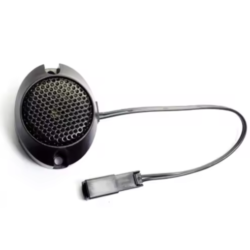
Ultra Detect Pro Industrial High Frequency Ultrasonic Transducer Sensor – Asset Track Pro
Product successfully added to the Quote List
-
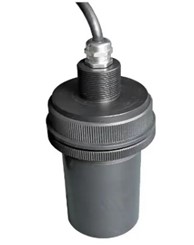
Ultra Guard Pro Xtreme Waterproof Ultrasonic Proximity Sensor High Precise-Asset Track Pro
Product successfully added to the Quote List
-
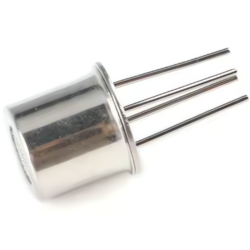
Ultra Low Power CO2 Sensor Semiconductor for Chemicals – Asset Track Pro
Product successfully added to the Quote List
-
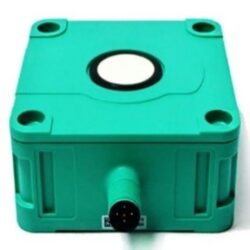
Ultra Wave Advance Precision Distance Sensor For Industrial Application-Asset Track Pro
Product successfully added to the Quote List
-

Ultrasonic Acoustic Sensor Precise Distance Measurement for Industrial Use – Asset Track Pro
Product successfully added to the Quote List
-
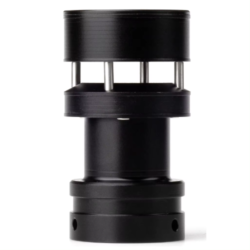
Ultrasonic Anemometer Wind Measurement for Meteorology Electronic Compass – Asset Track Pro
Product successfully added to the Quote List
-
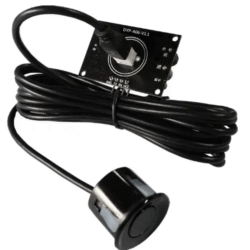
Ultrasonic Distance Sensor with UART & PWM Output – Asset Track Pro
Product successfully added to the Quote List
-
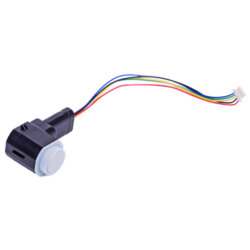
Ultrasonic Obstacle Detection Sensor with High-Quality Robot Navigator – Asset Track Pro
Product successfully added to the Quote List
-

Ultrasonic Precision Sensor with Acoustic Phase Compensation, 3D Stability – Asset Track Pro
Product successfully added to the Quote List
-
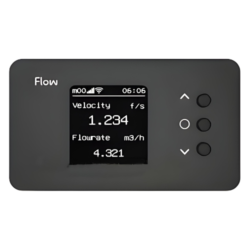
Ultrasonic Water Flow Sensor with LCD Display – Asset Track Pro
Product successfully added to the Quote List
-
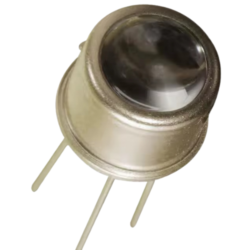
UV Sensor for Low UVC Radiation Detection – Asset Track Pro
Product successfully added to the Quote List
-
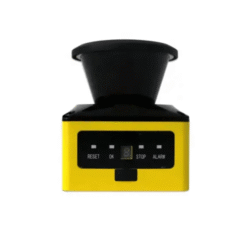
Versatile Safety Sensor, 3 Zone Types, 0.33° Resolution, IP65 – Asset Track Pro
Product successfully added to the Quote List
-
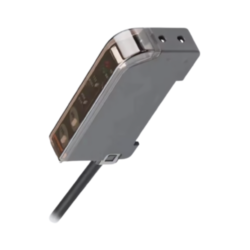
Vibration Resistant Optical Fiber Amplifier Photoelectric Position Sensor – Asset Track Pro
Product successfully added to the Quote List
-
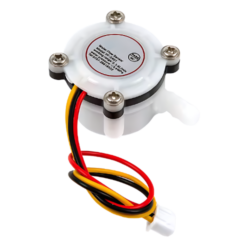
Water Flow Sensor – Asset Track Pro
Product successfully added to the Quote List
-
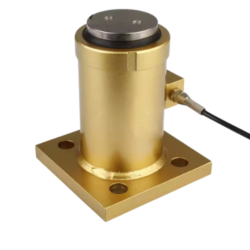
Weighing Bridge Digital Force Sensor and Digital Load Cell 10t, 20t, 30t and 40t – Asset Track Pro
Product successfully added to the Quote List